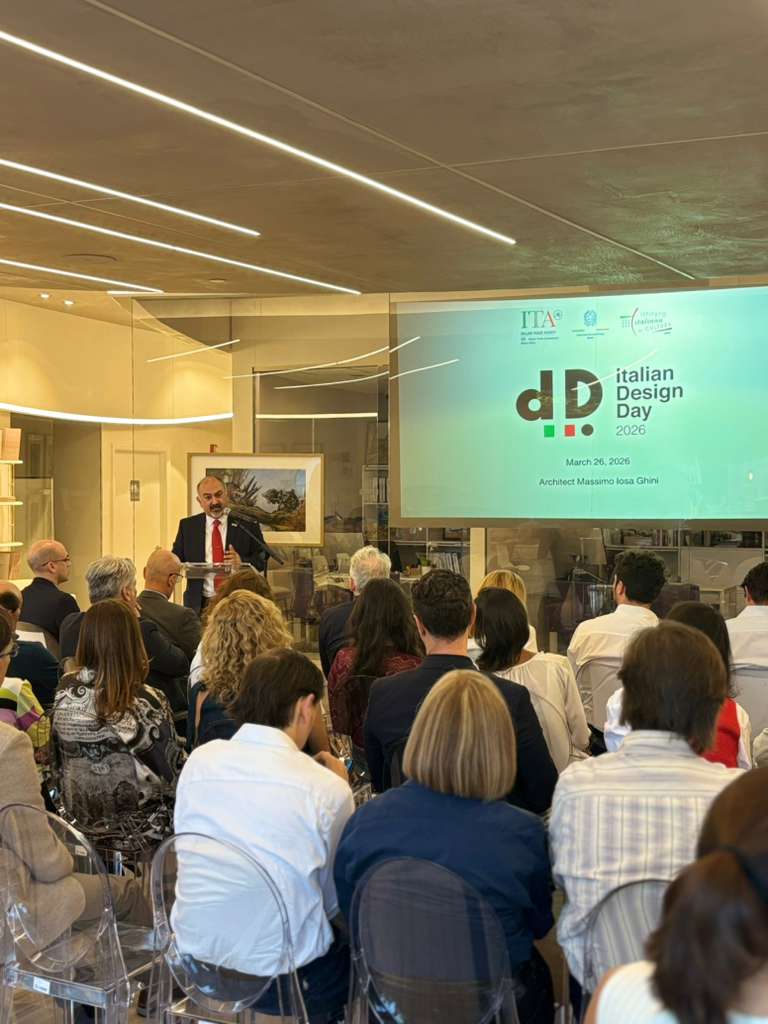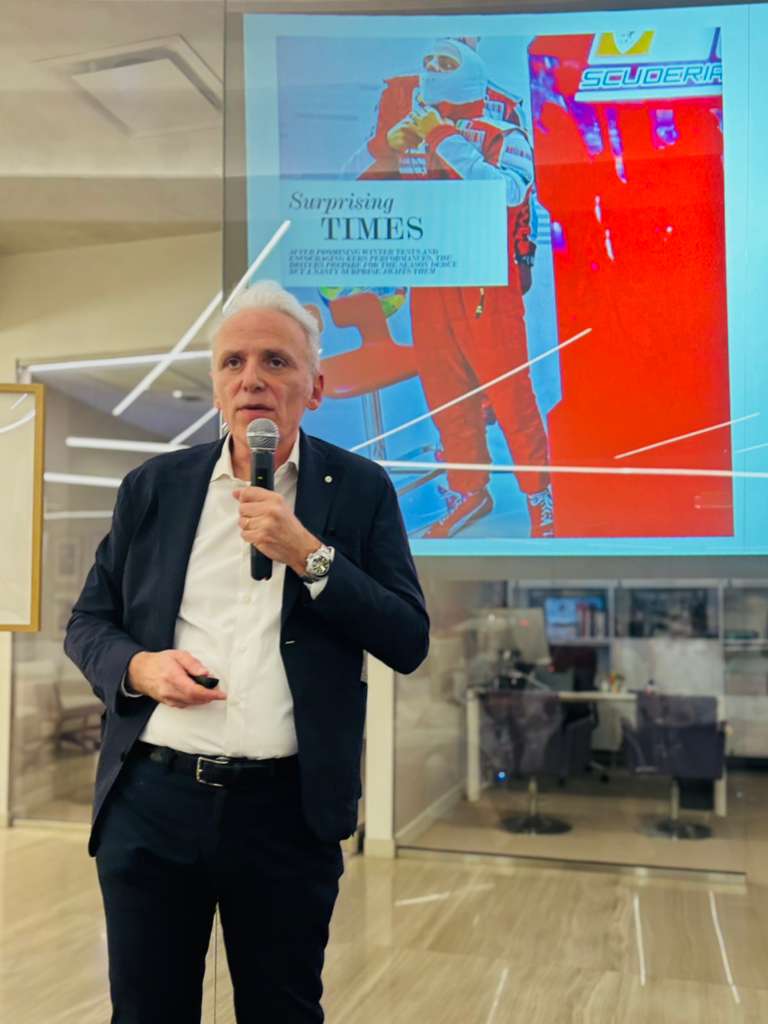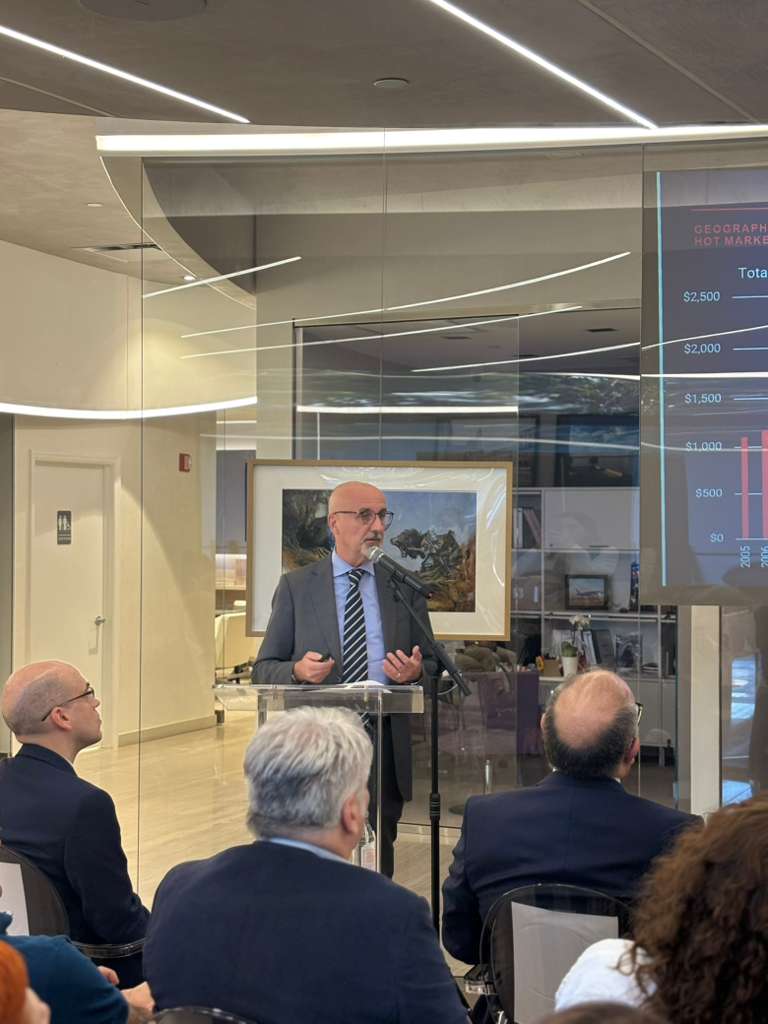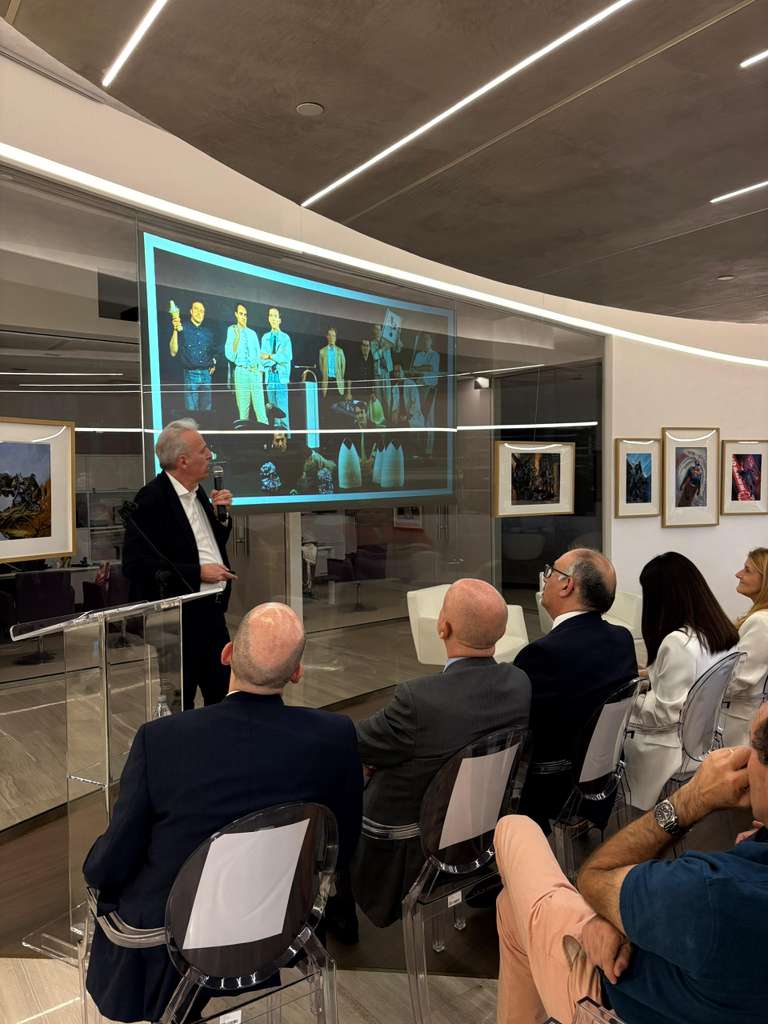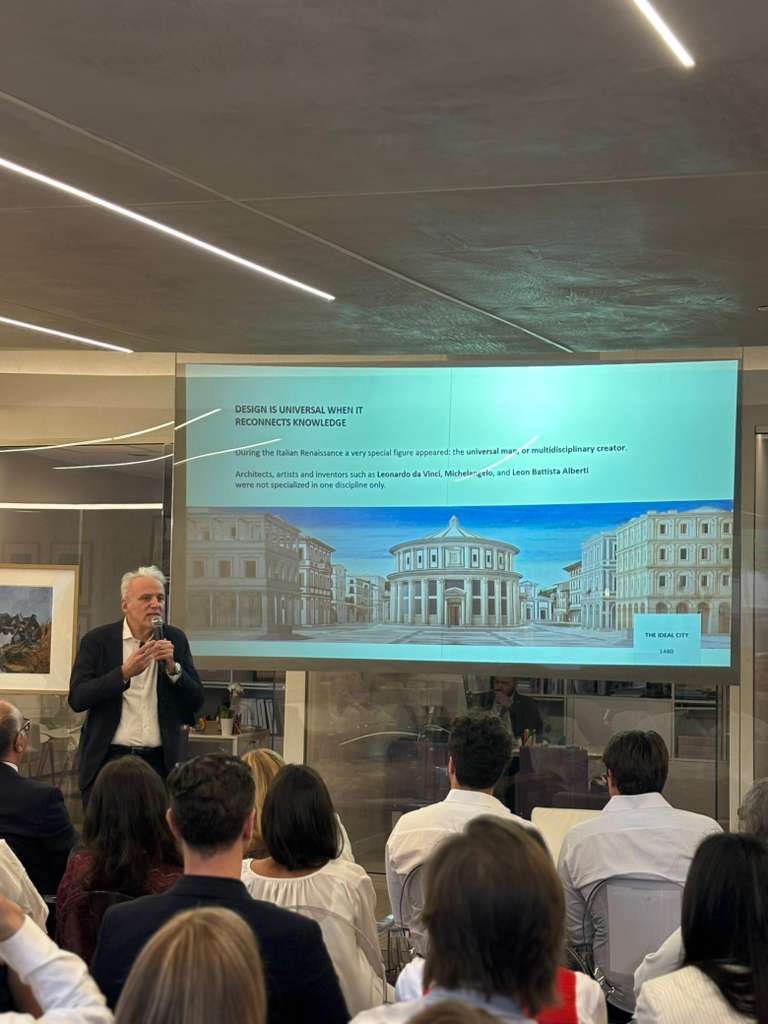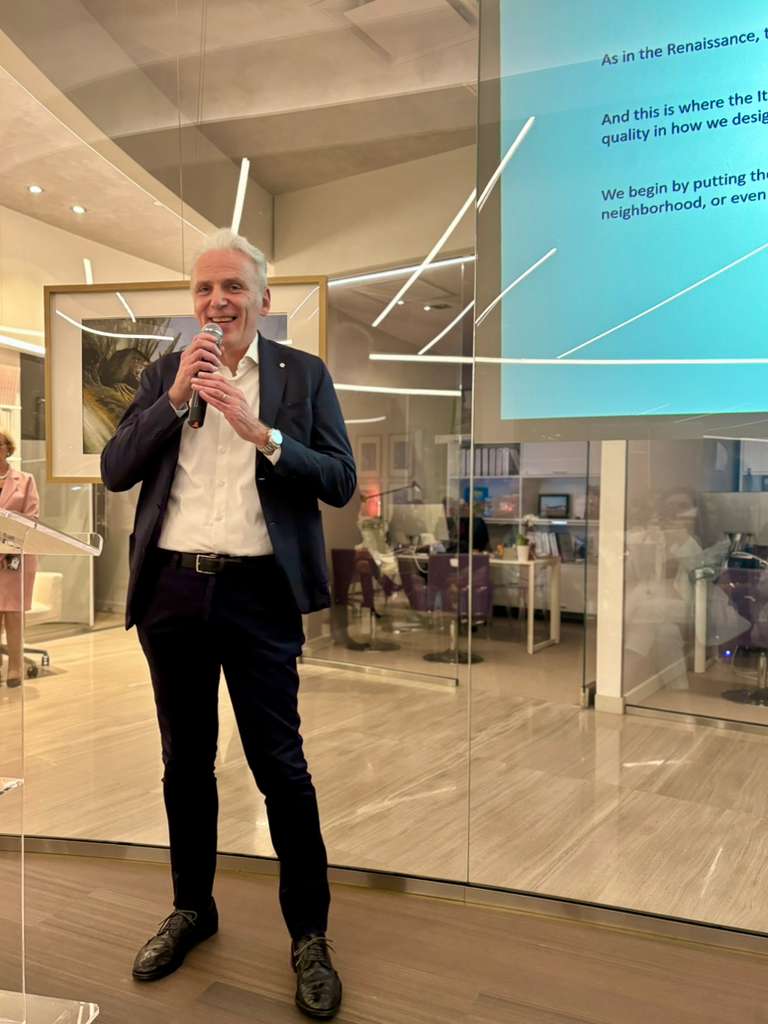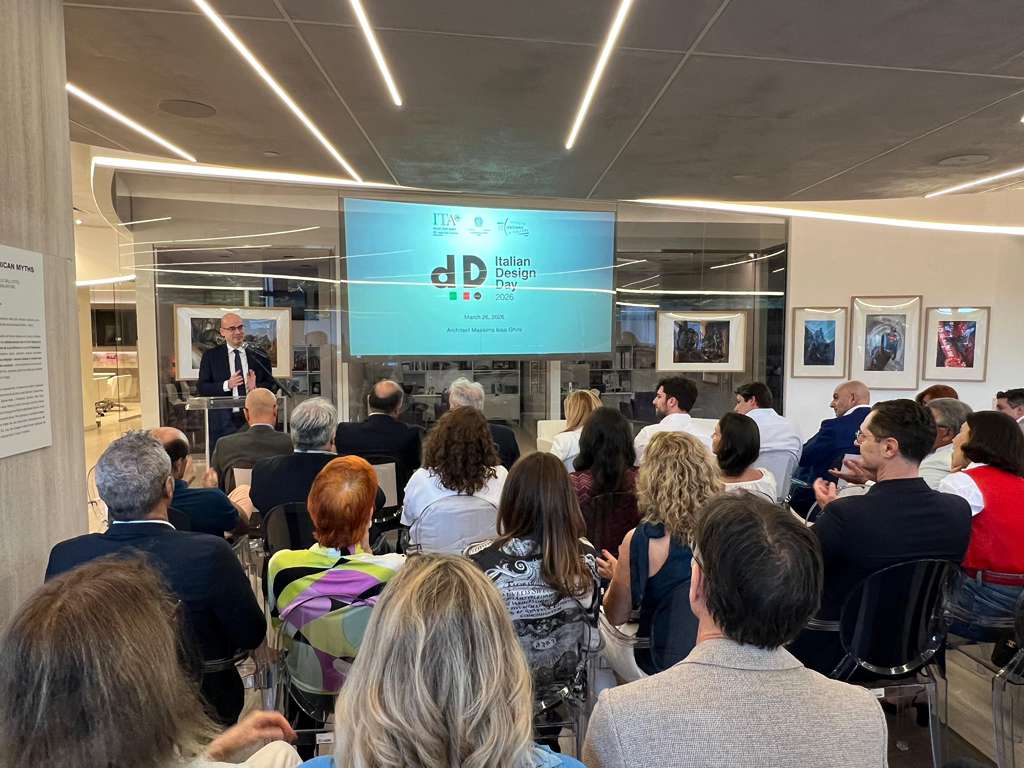
Miami – March 26, 2026 – The tenth edition of the Italian Design Day in the World was celebrated in Miami with architect Massimo Iosa Ghini, featured in a well‑received talk organized by the Consulate General of Italy and the Italian Cultural Institute, in collaboration with the Italian Trade Agency (ICE).
This year’s focus—the regeneration of urban spaces—is a central theme in Florida’s public debate, given the extraordinary growth of the Miami metropolitan area over the past decade. Combined with the distinguished cursus honorum of the ADI Ambassador, renowned for his many residential and commercial projects throughout the city, the event drew a large audience of designers, architects, journalists, and industry professionals.
Drawing on his decades‑long experience and referencing some of his most celebrated international projects—from furniture and product design to interiors and light infrastructure, following a comprehensive “from the spoon to the city” approach, as he vividly describes it using Ernesto Rogers’s words—Iosa Ghini illustrated the richness of the cultural matrix that defines Italian design. He highlighted its ability to interpret contemporary reality and to respond to the needs of global society, including through the optimal (re)use of available resources and spaces.
As Consul General Mistò emphasized, Iosa Ghini explained to the many enthusiasts in attendance that the Italian design industry is significant not only because it contributes a substantial share of Italy’s GDP and exports, but also because it sustains a precious ecosystem of companies, technological and artisanal know‑how, traditions, and skills that lie at the very heart of the finest Made in Italy.
Viewed through a qualitative lens, Italian design reflects a human model—our model of the person—and the interactions that shape it. It is a way of thinking and living, deeply rooted in our cultural identity. Ultimately, Italian design is, in essence, culture.
From his early involvement in the Memphis‑Milano movement under the mentorship of Ettore Sottsass to the maturation of his “bolidism-related” vision, Iosa Ghini illustrated how design fosters a dialogue between tradition and modernity, beauty and purpose, form and function—ensuring that value is preserved and passed on to future generations. Italian design, in particular, with its profound understanding of the human person and their needs, is uniquely equipped to achieve this, earning appreciation and admiration across the world.
Italian designers have long understood that aesthetics and ethics can reinforce one another. Whether through the use of sustainable materials, adaptive spaces, or thoughtful urban planning, design—at its best—enhances beauty while addressing universal needs and ensuring inclusive access to its benefits. Reading between the lines, one can truly say that Italian design has the power to transform the very fabric of society.
With its energy, dynamism, and global appeal, Miami offered the ideal backdrop for the rich and multifaceted reflection developed by Architect Iosa Ghini at our Italian Cultural Institute.